


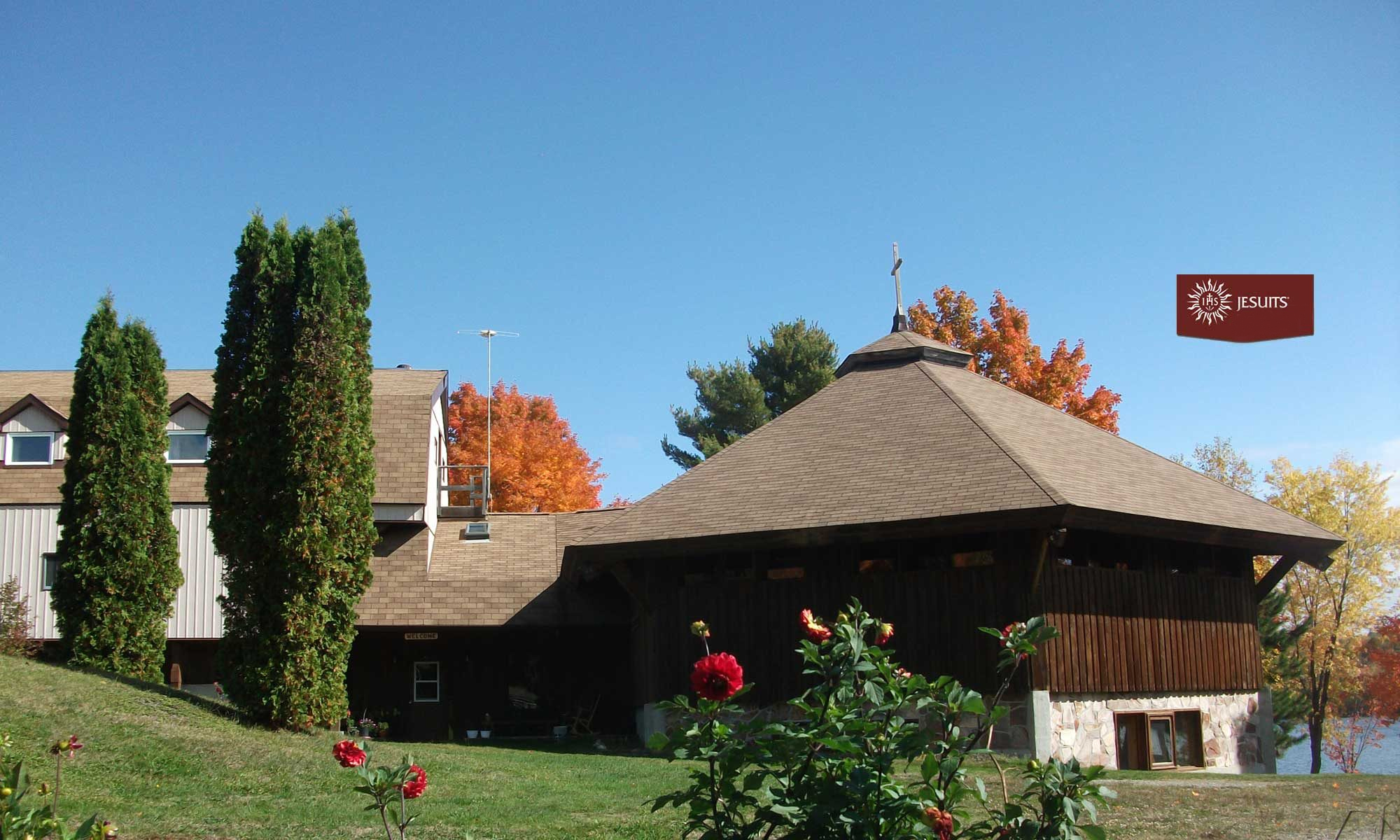

Wasseaandimikaaning – A place of enlightment for spiritual nourishment, growth and healing
For those of us who think God is silent, let’s take the ear plugs out of our hearts to hear, because God is never silent.
The first readings this past week were about how to live and conduct ourselves. In the gospels, it seems Jesus was shouting at us, trying to wake us up from our complacencies and privileged attitudes, “woe to us”. The messages we hear every year have not woken us up because we continue to live today as we did yesterday. Even in a pandemic, we continue to live in luxury and in abundance, at least in our western society. We have everything we could ever want at our fingertips and if we don’t have it, we can manipulate our way around to get it.
The story of the wake-up call continues in today’s readings. Deuteronomy tells us: don’t add or remove anything to God’s commandments. Human nature tends to minimize or rationalize what we are told, to suit ourselves. God is saying: stop doing that. We cannot manipulate God. The psalmist invites us to be authentic, by walking blamelessly and in truth. The letter of James talks about the necessity of action when we listen to God’s teachings; otherwise, we have a deaf ear. Jesus in the gospel spells out in detail all the ways in which we are hypocrites because He can see right through us. We are good at doing lip
service but missing in action. Jesus says, “their hearts are far from me”.
We are living in a pandemic, not just COVID, but pandemonium in countries where people are fighting for power and control. The earth is also retaliating through fires, floods, tornadoes, and earthquakes, as we hear daily in the media. All of these exist because we put human nature first, or human traditions first, before God. Our actions are showing our distorted values and Jesus is calling out to us: “listen to me, all of you…”. Let’s listen with action and not just with words. Let us change our lives, our actions
and behaviors by walking our talk. Let’s be authentic Anishnabek Catholic Christians.
Let’s be honest and open enough to hear that still small voice inside of our hearts that is yelling at us: “wake up” and look around you. What are we doing to ourselves, our world and our future generations if there will be any? We need to return to our ancestors and our grandfathers’ teachings with courage to be respectful, honest, truthful, humble, and loving, thereby receiving the by-product of wisdom from a good and balanced life. We will be a “wise and discerning people” whose God is near whenever called upon.
~ Sr. Terry Beaudry, cps
By Fr. Paul Robson sj
This year, it is a treat and a blessing to have the Solemnity of the Assumption of the Blessed Virgin Mary fall on a Sunday. This feast day is always celebrated on August 15 th ; but when August 15 th is a Sunday, the Assumption replaces the usual Sunday in Ordinary Time celebration.
On this day we recall how Mary was “assumed”, body and soul, into Heaven. In other words, she didn’t suffer death the way we do. This belief is related to another one: that Mary was a specially blessed person. Mary’s unique blessedness is mentioned in today’s Gospel reading, such as when her cousin Elizabeth says: “Blessed are you among women” (or, in Anishnaabemowin, “Awashime ki kitchitwawendagos endchiwaat ikwewag”).
Another feast day which is closely connected to today’s feast of the Assumption is the Queenship of the Blessed Virgin Mary, which is celebrated a week later, on August 22 nd . (However, unlike the Solemnity of the Assumption, the Memorial of the Queenship of Mary does not replace the usual Ordinary Time Sunday celebration, and so isn’t on the calendar this year.) A connection between Mary’s Assumption into Heaven and her being crowned Queen of Heaven is found in one of the prayers for the Mass of the Assumption, which states that “she was crowned this day with surpassing glory.”
Maybe the image of a queen wearing a crown seems old-fashioned, or like something belonging to another culture. Well, the notion of Mary as Queen of Heaven suggests, again, that she is a specially blessed person, and that she now has a special place in Heaven.
Another image and a good description of Mary, one that perhaps we can relate to more than the image of a queen, is that of a mother. Mary is not only the mother of Jesus, but was given by Jesus to us to be our Great Mother. And Mary loves us as a mother, and is there for us, and intercedes for us and for our loved ones and our world.
Mary, Mother of God and our Mother, pray for us.
(based on John10:17-18)
I am loved by you God.
I lay down or offer my day for you God.
So, I take up my work & living
for the service of others
and as an expression of love.
God, you have given me the power to offer my life freely
and I have the power to take it up again,
this day
and if you grant me a tomorrow,
then so be it.
Amen
by Fr. David Shulist, S.J.
Anishinabe Spiritual Centre–Wasseaandimikaaning

Music:
Session 1:
Session 2:
Session 3:
24th Sunday in Ordinary Time – September 13, 2020
By Fr. Gerry McDougall, sj
I was taught, more than once, that anger can have two outcomes:
one outcome can be good; another can be regrettable. If we let anger take hold of us, likely the outcome will be something we regret. But, if we take hold of anger, it is a powerful force for bringing about positive change, in our life, or even in the world.
Recently, the world witnessed a great tennis player have a short outburst which, gratefully, did not have the tragic consequences it could have had. He seemed to have acted out of anger, that is, anger at himself for how he was playing. Then, there are the teen ecological warriors of our times, whose anger, right-directed, at wealthy industrialists and powerful world leaders, is educating so many of us about the necessity to care for our Mother Earth, and is changing the hearts and minds of people everywhere, for the better.
Sister Helen Prejean, who wrote the book, Dead Man Walking, is another person who helps us see how anger can have undesired consequences. She is a strong, prophetic advocate against capital punishment, by which an offender is offered no forgiveness, no mercy, but rather has his life taken, apparently, by the collective vengeance of society. In some cases, even innocent people have faced execution, and the lives of many in our world have been the cost of saving the face, and pride, of dictators and other bullies. Sister Helen hopes that more and more of us will recognize the great healing power of mercy.
We have all heard the phrase, “the wrath of God,” but Jesus came to the world to teach us that God is Love, pure Love. If God ever does get angry, that anger is always right-directed, directed by God’s Spirit of pure Love, and we never experience God’s “wrath” as vengeance, but rather as mercy, forgiveness, compassion, healing, guidance, the call to holiness, the invitation to the fullness of life, the abundance of life. Let us choose life, love and mercy, and with Jesus, let us bring more forgiveness, healing and justice into our world.
By Fr. Jim Kelly, s.j.
1st Sunday of Lent
1st March 2020
So the season of Lent has begun. It is a ‘season’ not so much because it is a certain number of days, but because it is the appropriate time for something, the right time. The word ‘season’ comes from the Latin word for ‘sow’, as in to sow seed in the field or the garden (when the time is right). That is also the same root as to ‘season’ foods–to throw the right herbs or spices in the pot when the time is right.
Sometimes we say there are four seasons (Winter, Spring, Summer and Fall), but as these past few weeks have shown it is much more delicate than that. Consider how in February, especially in our area, we had beautiful winter weather with plenty of snow and cold temperatures. But many days the sun beat down with surprising heat. The other day I saw some people ice-fishing with no hut but just their folding chairs. They looked more like they were on the beach in July. And I heard a song-bird whose name I do not know but whose voice I recognized from last summer. I wondered if this little one knows what season it is.
Our season of Lent is a chance to imitate Jesus’ experience of going out into the desert for forty days and forty nights. Jesus, Son of God, free of sin, goes out alone into the wilderness to fast and pray. There he is tempted by the Devil himself who can offer him food, and independence, and great power over others. Why does Jesus go out into this wilderness, into this time of temptation?
And for you, really, what are you asked to do in these forty days to grow closer to Christ? The Church proposes that you: 1) Fast. Seriously, is there some food or activity that you should just cut out in this season?
2) Give Alms or give something to the poor. You have a chance to donate something to someone more in need than you. You know full-well that near where you live there is a neighbour who could well use a new set of towels or some good cooking pots. If you give in this way you have to be careful never to appear snooty with your nose in the air. You give as one friend would give to another. If it is helpful, you ask another person to give the gift from you, saying simply that “a friend asked me to give this to you.”
3) Pray. Go to Mass more often, or to prayer groups, or the Stations of the Cross when they are offered; and encourage your friend to come with you. But beyond that spend at least some private time each day during Lent in prayer. Why? Nothing more than to be present with Jesus during his forty days of prayer.
Paul Robson sj
Coming up this week is Ash Wednesday, which is the first day of the season of Lent. At the Holy Cross Church here in Wiikwemkoong, and in many churches around the world, there will be a distribution of ashes at Mass on Wednesday. In some parts of the world, the ashes are sprinkled on the heads of the faithful. Our local custom is to place the ashes on the forehead, in the form of a cross. We might be interested in knowing: why ashes, and why the forehead?
My investigation of these questions has revealed that there is a long history involved, going back to the pre-Christian traditions of the Jewish people as recorded in the Hebrew Bible (or Old Testament). There are stories in the Old Testament of people sprinkling ashes on their own heads, or sitting in ashes. The placing of a mark on the forehead is also found in the Old Testament, as seen in one of the visions of the prophet Ezekiel. (See Ezekiel 9:4.)
The meaning behind the ashes, as I understand it, is one of penance for wrongdoing; or the ashes can represent mourning and death. Regarding the forehead, in the Catholic Church today, we make the sign of the cross on the forehead not only on Ash Wednesday, but at the time of Baptism and Confirmation, and during the sacrament of Anointing of the Sick.
Also, at the time of the reading of the Gospel at Mass, all are invited to make the sign of the cross, first on their foreheads, then on their lips, then over their hearts. As we make these gestures, we can think of a short prayer such as this one: “The word of God be ever in my mind, proclaimed by my lips, and pierce my heart leading me to deeper communion with you, Jesus.”; Or a simpler prayer is: “May the Lord be in my mind, on my lips and in my heart.” May God bless us during this season of Lent. May it be a time of repentance and turning to God, and a time of quietly waiting for the celebration of Easter.
By Fr. Paul Robson S.J.
Maybe this winter (or this summer if you´re in Australia) will go down in history as the moment when the people of our world realized that climate change is real and that we´re in the midst of a climate crisis. An Australian reporter, in the context of the wildfires in that country, stated the following: “Climate change has stopped being something to argue about. When you breathe in the ash and feel the pain in your heart, you can no longer deny it.”
Wiikwemkoong´s own Autumn Peltier was one of the young people who took part in a panel discussion this past week, at the World Economic Forum in Davos, Switzerland. She and other youth leaders are working toward empowering other young people, as well as moving the hearts and minds of world leaders and the general public, with the goal of addressing the climate crisis.
Today´s readings talk about a light shining in the darkness. In Australia, with the fires, I suppose that there is too much light these days, and not enough darkness! But the Biblical image of light shining can be understood as referring to the light of love, the light of goodness, the light of Christ! Let us pray that this light might shine brightly in our hearts and in the hearts of others.
May this light radiate outward from us and be evident in many ways, including in the ways we respect, care for, and live in harmony with our common home, God´s creation.
By Fr. Jim Kelly SJ