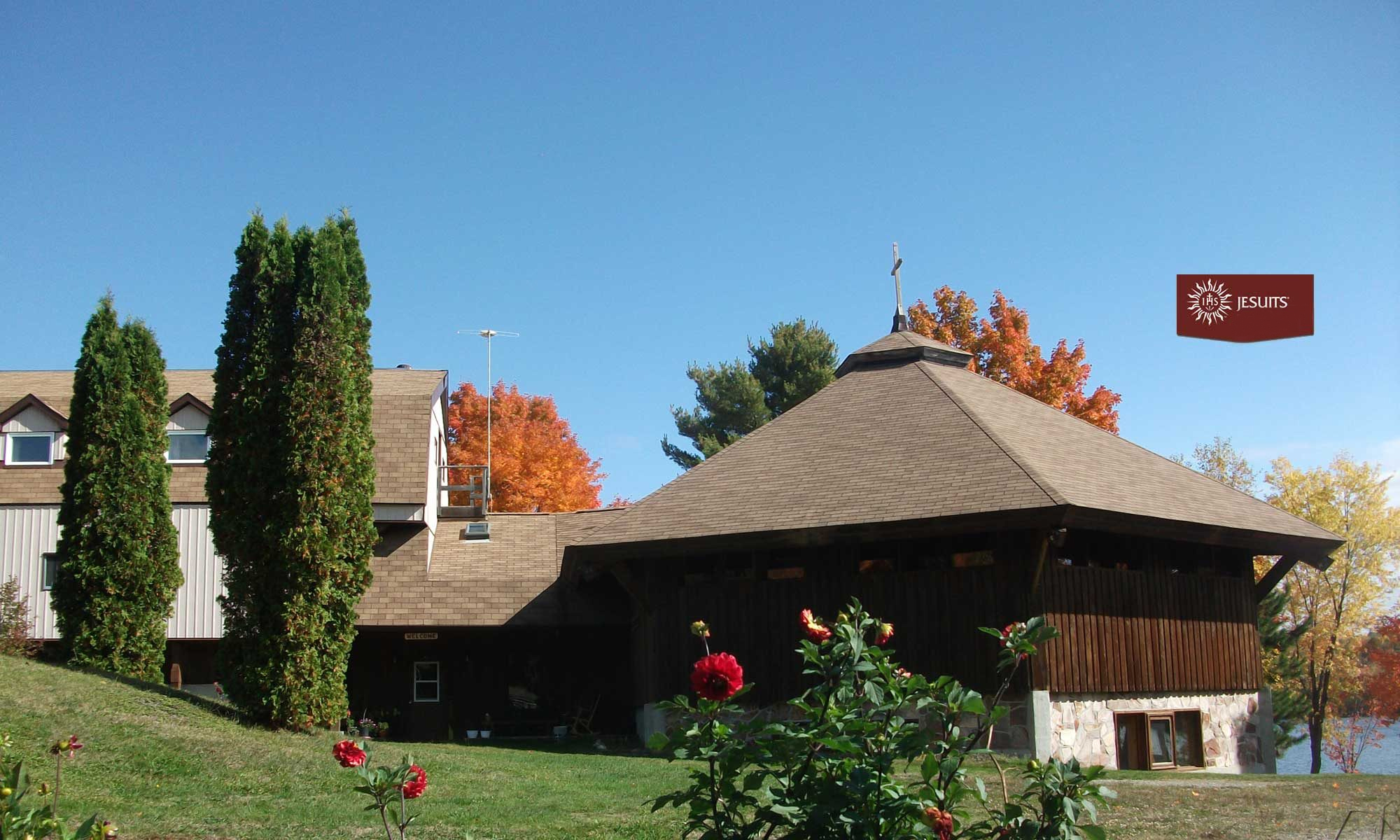
The Emergence of the DOS Ministry in the Sault Ste. Marie Diocese

by Justin Dittrick

May 15, 2012

The Diocesan Order of Service (DOS), formerly known as the Diocesan Order of Women (DOW), was inaugurated in 1975.  The Order is unique to the Sault Ste. Marie Diocese.  Initially, it was a title bestowed on the wife of a deacon.  Today, it is granted to any layperson, man or woman, who wishes to make a lasting commitment to service in the Church.  With fewer deacons being ordained in the Sault Ste. Marie diocese, the role of the Diocesan Order of Service has undergone a transformation.  Formerly, the DOS served as a reader and acolyte.  Now, DOS perform some of the activities that the priests would have carried out in the past.  A DOS can preside at Communion services, and distribute the Eucharist.  A DOS can also lead wake services  and minister to the sick.  DOS often perform purification rites which involve the Native practice of smudging.  This assumption of a greater number of responsibilities has made the DOS important spiritual leaders in the Sault Ste. Marie faith community.  

The goal of the DOS ministry has been twofold: to assist priests and deacons in ministry,  and especially within the First Nations parishes, to encourage First Nations peoples to become leaders in their Catholic faith communities. Since Vatican II, there has been a growing recognition that Christian lay people are called to ministry.  Lay Ministries, including the positions of Eucharistic minister, lector, and acolyte, were created in response.  

For formation, DOS complete a four-year program under the supervision of a spiritual director.  This director can be a priest, deacon, religious brother or sister, or a layperson with training in spiritual direction.  The formation process concludes once the DOS has been mandated.  The mandating is not a sacrament, but a commissioning.  Once the DOS is mandated, she (or he) begins her (or his) work in the Church and community.

In the Native Sector of  the  Sault Ste. Marie diocese, there are presently nineteen DOS, all women.  A DOS has been called by God, and feels inspired to contribute to her community.  Motivations are as diverse as those who serve.  Beatrice Lake views the DOS as an opportunity to inspire others to participate in the Church.  In seeing her ministry, others will be encouraged to give some of their time to God and their community.  Rose Peltier, the very first DOS to be mandated, wanted to be a nun.  She wanted to learn about God and to help in the Church, but raising a family kept her from joining the sisterhood.  The position of DOS helped to satisfy her spiritual needs and at the same time her pastoral ministry needs.  Rosella Kinoshameg and Margaret Toulouse were already fulfilling a number of responsibilities in the Church, so they were offered the role of  DOS in recognition of work they had already been doing.  

The position of DOS requires a close connection with the community.  This closeness creates a situation in which there are both grace-filled moments–times in which God’s love is strongly felt and recognized–and moments marked by despair, frustration, or a feeling of vulnerability.  Contributing to the sense of challenge that DOS face is the dwindling number of deacons and priests in the Church.  This can place on today’s DOS an overwhelming set of responsibilities.  Yet, even though the DOS may perform many of the duties of a priest, some members of the faith community are reluctant to accept the DOS as their minister, preferring that a priest perform the services.  This can cause the DOS to feel overworked and under appreciated.  The lack of available priests, and the readiness of the DOS to perform needed services, can cause conflict among families, as well, especially on occasions such as weddings or funerals, when expectations are greater and stress levels are higher.  

Also, many DOS have observed the erosion of faith among the youth.  Apathy and boredom have led some younger members of the community to drugs and criminal behaviour.  One DOS remarked that, while members of her community strive to maintain an appearance of well-being, underneath the surface the community has been ravaged by drugs, crime, and suicide.  

Yet the youth are also the greatest source of hope and inspiration for today’s DOS.  Seeing the young people at Mass has an inspirational effect on the faith community.  Just the presence of the younger generation makes the Church healthier and brighter, more fully alive in Christ.  Another source of hope is found in those who return to church following a period of absence.  In the return of the absent the Holy Spirit works quite visibly; it is a grace-filled moment inspiring the recognition of restoration, renewing the spirit of togetherness and belonging.  Distributing the Eucharist has been a special joy and privilege for the DOS.  In a faith centered around the Eucharist, the presence of the DOS ensures that all members of the faith have the opportunity to receive communion, that no member of the faith hunger for the Eucharist.  It remains the wish of the DOS that the Bread of  Life remain in the church throughout the week, so that communion can be given at whatever time there is a need.

It has been thirty-five years since the DOS program was created, and its future looks strong and bright, a promising vocation for men and women who feel called to minister in, and to, their faith communities.  With fewer deacons and priests being ordained in the Sault Ste. Marie diocese, it is likely that DOS and laypeople will assume greater responsibilities in the years ahead.   It is alsopossible that the Sault Ste. Marie Diocesan Order of Service program will provide a model for other dioceses to imitate as they face their own shortages of priests and deacons.  Finally, it is expected that as the years go by there will be greater acceptance of DOS as ministers. The integration of First Nations traditions and practices, such as the medicine wheel teachings and the practice of smudging, will continue making the First Nation churches of the Sault Ste. Marie diocese more rooted in their culture.  

With the Anishinabe Spiritual Centre in Espanola, Ontario providing a formation program for those interested in lay ministry, and with a close knit group of priests, deacons, and DOS continuing to meet monthly, a warm and knowledgeable community is present  to share the faith and the ministry. 

Volunteering at Anishinabe Spiritual Centre – Espanola, ON

April, 2012 – By Justin Dittrick

On February 1st, 2012, my plane touched down in Sudbury, where I was greeted warmly by David Shulist, S.J.   We loaded my luggage into David’s car and away we went.  My destination was the town of Espanola, or more exactly, the Anishinabe Spiritual Centre, which rests on Anderson Lake about five minutes south of Espanola.  David pulled out a map, and as we drove, he showed me the towns and reserves that comprise the Manitoulin-North Shore region.  Having come from Regina, Saskatchewan, I had not the vaguest notion of where we were headed.  David sketched for me the history of the Jesuit presence in Upper Canada and Ontario, told me of the Jesuit martyrs who had lived alongside the aboriginal people four hundred years ago.  He showed me on the map Wikwemikong, the only unceded reserve in all of Canada.  He pointed out Spanish River and M’Ch’geeng, Sagamok and Little Current.  The North Shore region is rich with Canadian and Jesuit history.  It would be natural to feel part of the Great Spirit that overcomes doubt and strengthens, an evolving tradition that enfolds and enriches, that unites its people and enlightens them.  Soon it was my turn to share.  Why had I come?  What was the purpose of my visit?   I had no grand ambitions, no goal that could be so simply stated.  I knew I would observe firsthand the lives of the Jesuits among the Anishnabe people.  I would observe how the Anishnabe people and the Catholics lived alongside one another.  What could be the fruit of Christian and Native spiritualities sharing a vision for a healthier, more loving, more peaceful world?  What in their traditions do they hold in common, what in their traditions is complementary?  What past and future do they share?  In what ways do they differ?   

But there was a deeper reason why I had come.  My motivation was not chiefly academic.  I came to the Centre to volunteer and to help in whatever capacity I could.  I wanted to serve the True, to play an active role in the mission of Christ.  I would experience a taste of the religious life in an ideal setting, in circumstances that would grant me an opportunity to regain my spiritual composure and direction.  I had long thought of becoming a Jesuit, but my spiritual life had become beset with worldly obstacles and doubts, mired in illusory thinking.  I didn’t know where to go, what to do, for I had tried everything, and everything I had done had passed away into memory, into the contemplation of the hereafter.  I had for some time lived in myself, for myself, and felt obliged to cultivate illusions about the self, the world, the other.  I went along with a story, whether or not that story was true.  At some point, I experienced a hunger of the soul to contribute to the well-being of a community of others who believe, to contribute to a greater and raised consciousness, to see and feel my own action in the Spirit, and to realize change in daily practice and action.  I had decided that the opportunity to live communally, to share in the gift of life with others, would clear my mind and soul of illusions.  In so doing, I would come to know a Spirit that would be True and eternal, not false and fleeting.

The Anishinabe Spiritual Centre provides a site and staff for individuals, communities, and organizations seeking retreat and rejuvenation.  The Centre is Christian-Anishnabe, an evolving and creative vision drawn from the springs of the two traditions.  It is also ecologically conscious.  Care for the Earth and reverence for nature are two components of its identity.  It is a five minute drive from Espanola, but remote enough to provide its retreatants with a setting that is picturesque.  It is set on Anderson Lake, where there is fishing, canoeing and swimming.  There are hiking trails and ample space on the grounds for walking, meditation, and yoga.  (Very recently, ASC welcomed Arturo, a yoga master, as a member of the staff).  The log cabins are spacious, warm, and equipped with all the amenities of home.  Yet as log cabins, they feel intimately a part of their surroundings, inspiring a reverence for nature, for the gift of creation.

For the volunteer, there is much to do, much to be a part of.  The Centre functions as a creative hub for the surrounding reserves.  Paul Robson, S.J., and I regularly travel to Wikwemikong to teach students at the local schools about the sacraments.  The Jesuits on staff assist members of the surrounding reserves in the organization of events, projects, and initiatives to build a stronger, more lasting faith in their communities.  In my time here, we have hosted youth days, monthly ministries programs for lay ministers, and Masses for any who practice the faith.  One of our ongoing projects is a year-round youth retreat that will inspire its participants to become stewards of Creation, better leaders in their communities, and to live the Gospel as their talents and gifts allow them to do.

While the Centre is Christian-Anishnabe, it is an ecumenical space.  People from all walks of life are welcome.  Those who arrive to stay on retreat or to work as volunteers can expect to discover a vital balance in themselves, to feel more fully a part of the work of the Spirit, and to be affirmed in their faith, whatever that faith may be.  I look forward to several more months as a volunteer, and hope that others may follow the same inclination I had, to become a volunteer at the Anishinabe Spiritual Centre.

A Surprise Guest…

A Surprise Guest

 by Paul Robson SJ

July 22, 2012 

On a mid-July afternoon here at the ASC, a surprise visitor rolled in. He rolled in on a recumbent bicycle laden with gear of various shapes and sizes. Greeted by Fr. David (is that correct?), he was happy to find here some friendly faces and a place where he could rest.

visiting with Fr. David Shulist S.J., the morning of Alex’s departure

Our guest’s name is Zbigniew Czyzak, but he goes by Alex. Originally from Poland but living in France, he is doing no less than travelling from Vancouver to Montreal by bike. He has been staying in hostels and camping, usually sleeping in a hammock under a tarp. (He told me about looking out from under his tarp one morning, and looking into the face of a bear!) A woman in the town of Espanola, nearby, had suggested to him that he might find lodging here at the Centre for the night.

As I had tea with Alex, and chatted with him in French, I found out that he is something of an expert on tea – has written a book on the topic, no less. He told me that green tea can decrease the chances of HIV developing into AIDS. On a more immediately practical note, he suggested that I let my tea steep for ten minutes, to allow it to take full effect.

Alex also told me about some of the events of his cross-country tour. The story of his adventures through Canada reminded me of the pilgrimage that I undertook as a Jesuit novice. He spoke of his journey being a kind of pilgrimage, too. We talked about being out on the road, uncertain of what will happen next, having to trust in God and the kindness of strangers.

We then toured around the Centre. Alex was most moved by a picture of Pope John Paul II. A tear came to his eye as he shared that, to him, the Pope had given the Polish people the strength to overcome Communism.

A journey such as Alex’s puts one in a position to really appreciate life, I would say. And it rubs off on others: Alex’s excitement and joy helped me to appreciate the day and all the blessings in my life.

Among the Indigenous Peoples of Northern Ontario – Fr. Mike Stogre, S.J.

(Article from the “Yearbook of the Society of Jesus 2011”)

The society of Jesus has been present among the indigenous peoples of Ontario and minnistering to them since the 17th century. Our presence was interrupted by the suppression of the Society of Jesus, but began again in 1842.

By 1845 Jesuits took charge of the main mission station in Northern Ontario established by l’Abbe Prolx, a diocesan priest, at Wikwemikong, on Manitoulin island. It had been the goverment plan that all native peoples in Ontario would move to this island because they were now few in number, would soon die out (“vanishing like snow before the April snow” as Lieutenant-Governor, Sir Francis Bond Head put it) and were impeding

European settlement.

Well they didn’t all go to Manitoulin and they didn’t die out. Through the last half of the 19th century and now into the second decade of the 21st, the Society of Jesus has maintained a continuous presence and base on Manitoulin Island.

Modelled somewhat on the Paraguayan Reductions and rooted “perfect society” model of the church, foreign and native born Jesuits accompanied the peoples of the three fires confederacy (Odawa, Ojibwa, and Pottawatomi tribes) through the centuries to our own day. So the Jesuits have been present through significant phases of Aboriginal history. The fur trade era was a stage of relative mutually.

This overlapped the era of military alliance which resulted in a period of treaty making, and the establishment of separate native territories known in Canada as reserves.

The indigenous population greatly diminished and, isolated, entered a period of irrelevancy where numbers continued to decline and the future looked bleak. Finally, after the Second World War, a new and unexpected phase of revival / revitalization took off. Anthony Wallace, an anthropologist, defines the process this way: “Revitalization is a deliberate, organized, conscious effort by members of a society to construct a more satisfying culture.” Revitalization movements can take various forms including the “nativistic” mode in which the culture tries to eliminate everything foreign from the original culture.

This has proven totally unrealistic in the modern world.

There is also the “revivalistic” mode which tries to retrieve and reintroduce cultural elements and practices that once existed or were thought to have existed in the original culture. Unlike the nativistic movements this type is open to new and imported elements from other cultures. This is what we commonly see among those who are trying to revive indigeous cultures.

Finally, there are movements which are primarily “importational.” Usually it is mostly material elements that are desired and sought after. Witness the “cargo cults” of the South Pacific during and after the Second World War.

Whether it realized it or not, the Catholic Church itself was facing the need for in depth revitalization. Vatican II was the crucial first step in this process. It developed a vision for the future drawing from past treasures, as well as being open to the gifts of contemporary cultures. So the Roman Catholic Church entered a period of revitalization in a “revivalistic” mode. Lately, though, the Church seems to be moving consciously into a “nativistic” period of cultural change.

In the midst of this Church ferment, led by creative individuals like Fr. Michael Murray S.J., the builder and first director of the Anishinabe Spiritual Centre (ASC, www.anishinabespiritualcentre.ca), situated in Espanola, Ontario, our way of being present to the native Church of Northern Ontario changed dramatically. As this process accelerated the Jesuits of English Canada entered into a communal discernment process at Guelph under the  discretion of the late Fr. John English S.J. (1924-2004). At that meeting the apostolate to the native peoples of Northern Ontario was affirmed, and the province allocated significant funds to the ASC to implement the vision of Vatican II.

The Sault Ste. Marie diocese, in which the Centre existed, has already affirmed similar directions at a local synod in which the Jesuits also played a role. Having supported the reintroduction of the diaconate and going further by devising a similar commissioned ministry path for women, the stage was set for similar development in the native sector of the diocese.

Today, After more than a quarter-century of offering a ministries program to the indigenous people of the Sault St. Marie, and other dioceses in which we have worked, we face new challenges as Jesuit personnel are few and far between. Many of our first graduates, both deacons and commissioned women ministers, have died or retired. Despite the difficulties we continue with more than twenty candidates for ministry. Today they are a mostly women. In addition to forming seventeen men for the diaconate, and nineteen women for the Diocesan Order of Service, the ASC has trained two men for the Diocesan Priesthood.

In 1984, at Midland, Ontario, Pope John Paul II met with many of our first deacons where Jesuits and Huron Christians shed their blood for the faith. There in his closing remarks he acknowledged  and affirmed a revitalization process that would bring together the Christian faith and native culture: “Thus the one faith is expressed in different ways. There can be no question of adulterating the word of God or of emptying the Cross of its power, but rather of Christ animating the very centre of all culture. Thus not only is Christianity relevant to the Indian peoples, but Christ, in the members of his Body, is himself Indian.

Michael Joseph Stogre, S.J.

A Surprise Guest at Anishinabe Spiritual Centre – Espanola, Ontario

 by Paul Robson SJ

July 22, 2012

Alex visiting with Fr. David, the morning of Alex’s departure

On a mid-July afternoon here at the ASC, a surprise visitor rolled in. He rolled in on a recumbent bicycle laden with gear of various shapes and sizes. Greeted by Fr. David (is that correct?), he was happy to find here some friendly faces and a place where he could rest.

Our guest’s name is Zbigniew Czyzak, but he goes by Alex. Originally from Poland but living in France, he is doing no less than travelling from Vancouver to Montreal by bike. He has been staying in hostels and camping, usually sleeping in a hammock under a tarp. (He told me about looking out from under his tarp one morning, and looking into the face of a bear!) A woman in the town of Espanola, nearby, had suggested to him that he might find lodging here at the Centre for the night.

As I had tea with Alex, and chatted with him in French, I found out that he is something of an expert on tea – has written a book on the topic, no less. He told me that green tea can decrease the chances of HIV developing into AIDS. On a more immediately practical note, he suggested that I let my tea steep for ten minutes, to allow it to take full effect.

Alex also told me about some of the events of his cross-country tour. The story of his adventures through Canada reminded me of the pilgrimage that I undertook as a Jesuit novice. He spoke of his journey being a kind of pilgrimage, too. We talked about being out on the road, uncertain of what will happen next, having to trust in God and the kindness of strangers.

We then toured around the Centre. Alex was most moved by a picture of Pope John Paul II. A tear came to his eye as he shared that, to him, the Pope had given the Polish people the strength to overcome Communism.

A journey such as Alex’s puts one in a position to really appreciate life, I would say. And it rubs off on others: Alex’s excitement and joy helped me to appreciate the day and all the blessings in my life.

The ASC Revitalization Project – Paul Robson S.J.

For my second year of regency, part of my formation as a Jesuit, I was sent to Anderson Lake near Espanola, Ontario, to the Anishinabe Spiritual Centre. This year marked a time of transition and renewal at the Centre and so of the work of the Jesuits among the First Nations people of Canada, I would say. It was a blessing for me to have been missioned to be part of that renewal.

            We Jesuits have been working among the First Nations people in this area since the 1840s. Why do we continue to live and work here? Rosella Kinoshameg, an Anishinabe woman from Wikwemikong, recently spoke at a gathering of Jesuits. She reminded us of what Pope Benedict XVI told the Society of Jesus at our recent General Congregation: that we Jesuits are called to “reach the geographical and spiritual places where others do not reach or find it difficult to reach”. The Society tries to be present to people and situations where there is suffering and need, where there are challenges to face and where people are neglected. We find such a situation here. Rosella stated that “today so many are broken and in great pain . . . The Jesuits need to be with and work with these people.”

            The ASC (Anishinabe Spiritual Centre) was built over 30 years ago, and by all accounts it thrived for many years in its ministry to the First Nations people. Many Native Deacons and DOS (Diocesan Order of Service, women who are mandated to assume leadership roles in the Church) were trained at the Centre. There have been sessions of spiritual and theological reflection, in collaboration with Regis College in Toronto. There have been summer camps, a Wilderness Experience program for youth, marriage preparation classes.

            In recent years, certain programs at the ASC ended, others continued with diminished numbers. A reason for this slow-down was a diminishment in staff: as of 2010, there was only one Jesuit assigned to the Centre (but with others in the area). A year ago or so there was an infusion of new blood, as it were, starting with Fr. David Shulist S.J. who came in May of 2011 as the new Director. David brought with him fresh ideas, much energy and new aspirations for the Centre.

            Of central importance to our progress this year and to our hopes for the future, from the point of view of the Jesuits, is our collaboration with lay people. We have defined the ASC as not only a place but a community, with the Jesuits being one part of that community. The ASC also includes its lay staff, volunteers and other supporters.

The lay staff has also expanded recently at the Centre, including Arturo Garcia who has come on board as Assistant Director. The elder lay staff, Gerry Ziegler and Leonard Cywink, are also being joined by much younger lay people, Lindsay Auge and Kelly O’Connor, within this year as I move from regency to theology. Moreover, we recently had a young volunteer named Justin Dittrick with us for a few months, and are excited about the prospect of a new JVC (Jesuit Volunteers Canada) program that could bring other young people here, both to contribute to the mission and to grow and discover themselves.

Indispensable to the ASC are the First Nations people of the area, who not only come to the Centre for leadership training and spiritual retreats, but who offer such thoughtful insights into the needs and desires of the Native communities to which they belong. These friends of the Centre are thus a key part of our ASC community and work.

This discussion about collaboration reminds me of another point made by the Jesuits who convened for the 35th General Congregation: they stated that “lay and religious, women and men, indigenous persons and those of different religious and spiritual experiences: all these have changed us and nurtured in us a greater sense of the God “in whom we live and move and have our being”…[this] opened for us fresh avenues to implement our mission through more profound collaboration with the laity”” (Common Mission, p.54, GC 34).  Fr. Peter Bisson, SJ, Provincial, affirms that “we should not do by ourselves what we can do with others”.  This mandate can be quite a challenging one, I think, as it often seems better or easier to do things by oneself, and quickly, rather than working with others. It is my experience, though, that a project done with another or with others will usually turn out better than expected, and better than I could have done on my own.

One hopeful new project of the ASC’s, undertaken in this spirit of collaboration, is the WEY (Working to Empower Youth) program. The committee that has been working on this project has included me, Fr. David, Justin, and four members of the Sagamok Anishnawbek First Nation community. It is noteworthy that the inspiration for this program, which intends to bring young people from Sagamok and other local communities to the Centre, came not from the Centre staff but from the people of Sagamok. They saw a specific need within their community and sought the assistance of the Centre in putting a program together.

The need sensed by the WEY working group members was a lack of direction and of spirituality among the youth of their community. Spirituality, then, is an area of expertise for which the ASC is recognized, and to which it can contribute. Other areas of focus for our future programming are those of ecology and health. These areas are also important aspects of the tradition of the First Nations peoples. Thus they are natural points of contact, dialogue and collaboration.

A friend asked me recently if I thought the Anishinabe Spiritual Centre has a future. Certainly there is life, there are good things going on – and it has been an interesting and rewarding experience for me to be a part of this forward movement. I have a good sense that God has been present and guiding us this year.

I told my friend: let`s wait and see. Let`s give the ASC a few years and see what happens with some of the new endeavours that have begun. And the future of the Centre is not all planned out – and that is OK, and kind of exciting. This past year was not all planned out, either, but went well. I heard recently that St. Ignatius (the founder of the Jesuits, whose feast day we celebrated yesterday, July 31st) always took things one at a time, praying for the grace to be able to discern the next step. I pray that we at the ASC might follow his example, and might be able to say that we have proceeded prayerfully and have been able to detect the presence of God in our work.

Paul Robson S.J. 

The Role of the Anishinabe Spiritual Centre in the Native Sector – Fr. Mike Stogre S.J.

“Without a vision the people perish.” (Proverbs 29:18) Vatican II provided such a vision for the church. The Council drew from biblical, patristic, and contemporary sources-including the gifts of local cultures in this renewal process. As a result the Roman Catholic Church entered a period of revitalization. It also opened the way for an native incarnation of the Church.

In the midst of this church ferment, creative individuals like Fr. Michael Murray S.J., the builder and first director of the Anishinabe Spiritual Centre (founded 1979), set out to implement the Council vision. As a result the Jesuit way of being present to the native church of Northern Ontario changed dramatically. The circuit rider era of mission was drawing to a close. It was time for the birth of a truly native church led by native people.

Alex Carter, Marcel Gervais, and our present Bishop, Jean-Louis Plouffe all played vital roles in moving towards this goal. The Sault Ste. Marie diocese, in which the ASC existed, had already affirmed similar directions at a local synod in which Fr. Dan Hannin S.J., a life long Jesuit missionary, played a co-ordinating role. Having supported the reintroduction of the diaconate, and going further by devising a commissioned ministry path for women, the stage was now set for similar developments in the native sector.

Despite many difficulties, the Anishinabe Spiritual Centre continues receiving candidates for ministry. Today the vast majority are women. In addition to training seventeen men for the diaconate, and nineteen women for the diocesan order of women (now called the diocesan order of service), the ASC has helped prepare two men, Milton McWatch, and George Gardner for the diocesan priesthood.

Fr. Michael Stogre S.J.

1st Yoga and Meditation Retreat in ASC – Espanola, Ontario

1st Yoga and Meditation Retreat in Espanola, Ontario

The Anishinabe Spiritual Centre hosted the first Yoga and Meditation Retreat on August 24th to 26th. It was an event in which all of the participants learned the basics of Yoga (the practice, history and philosophy). All of the participants learned useful and practical tools that are helpful in everyday life, from breathing techniques to physical exercises.

One of the focuses of the retreat was the care of the spinal column and the correct alignment of joints. Participants are encouraged to go at their own pace and to be aware of their bodies.

This is the first retreat (level 1) in a sequence of Yoga and meditation retreats for those who would like to go deep into the practice of Yoga, but at the same time, going step by step so as to gain a better understanding of each level.

It is a retreat in which you can find the tools to grow physically, mentally and emotionally.

The ASC was the perfect place for this retreat, the practices and exercises took place in a beautiful room, and outdoors on the grounds of the property that is surrounded by the forest and the lake.

Contact us for upcomming Yoga activities and Retreats.

Jesuit Scholastics´ Annual Canoe Race 2012

Young Jesuits from across Canada have been coming here to Anderson Lake for many years, for their annual “villa” or holiday. One yearly tradition is the canoe race, which this year was won by the team of Daniel Leckman and Kevin Kelly. This year’s race also included three visiting Jesuits from Venezuela, who had set foot in canoes for the first time just the day before the race. Congratulations to all of the participants!

Scholastics Canoe Race 2012