


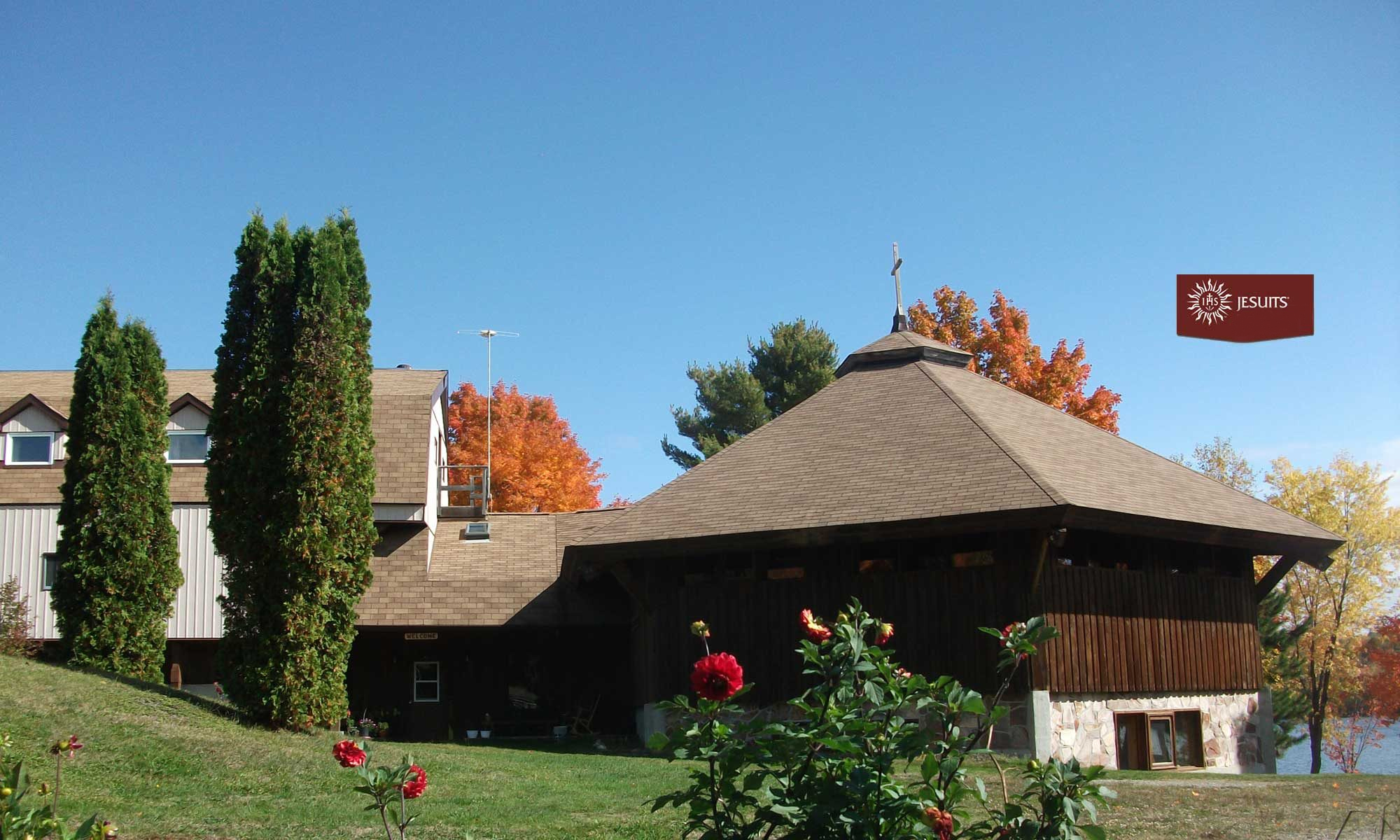

Wasseaandimikaaning – A place of enlightment for spiritual nourishment, growth and healing


By Kelly O’Connor
For those of you seeking a slightly different alternative for your health regime, or curious about trying something fresh and new with incredible health benefits, why not try yoga? For those of you unsure as to what it is – as I’m sure many of us, myself included, have heard of it before, but have not understood what it entails or stands for – allow me to explain.
 A few days ago I had the pleasure of meeting up with an incredible individual by the name of Arturo Garcia Olivera. He is of Mexican origin and has been living and practising yoga here in Canada for the past 5 years. Arturo has been practising yoga for the past 19 consecutive years of his life. He is only 39 years of age and has managed to master the art of Yoga, as well as earn the position of trainer of yoga instructors.
In the beginning, Mr. Garcia Olivera did not desire to attend yoga class. One of his good friends, who had signed up for a class, would request that Arturo accompany him and that they participate in the class together. Arturo never had the heart to say no to his friend, as he explained to me, and so he would attend the class with his friend time after time, until the year was up. That was his introduction to yoga. By the time the class was finished for the season, Arturo had discovered a new workout routine, hobby and passion. From that point on his career took shape.
Yoga is a union of the different areas within the human body: physical, mental, emotional, spiritual, and energetic, which make us complete and whole as human beings. By practising yoga we are able to bring balance and harmony among these areas within ourselves. Through various movements, such as strong holding positions testing our strength, softer flow movements challenging our agility, or stretching in other movements which extend our flexibility, we are able to gain focus and strength as well as many numerous health benefits. Yoga is for everyone because there is not one kind but many forms. For instance, Arturo is a certified yoga therapy instructor as well. This means that he is able to teach those with specific health needs. This form of yoga is called therapeutic yoga. Some examples of people who can benefit from yoga are those who suffer from arthritis problems, those who suffer from insomnia, or even depression. Yoga classes can be designed to help people with injuries or illnesses, just as well as those who are in good physical shape. As far as health benefits go, there is much to be gained from each session.
There just so happens to be a lovely Yoga Retreat coming up, for all those who are curious about trying it, either as a new beginner or an already active yoga enthusiast. Previous yoga experience is not required for this retreat. Arturo will be leading all those wishing to participate. This great opportunity takes place over at the Anishinabe Spiritual Centre here in Espanola. The friendly folk there would be more than happy to extend their hospitality and share the beautiful grounds with those interested. The retreat will be on the weekend of the 24th through the 26th of August 2012. However, if you desire to extend your stay for further yoga, relaxation time, or other enjoyment, you can do so. For information either on the retreat, or to stay at the Centre some other time, check out the website at www.AnishinabeSpiritualCentre.ca or phone (705) 869 – 4994. The people at the Centre would love to assist you in any way possible, so please do not hesitate to contact them.
This ancient Indian practise is slowly gaining popularity here in the Western world. I am simply inviting you to experience an alternative method to attaining good health in all aspects of the human person. I hope some of you will decide to give yoga a chance and discover for yourself what can be gained, according to your individual needs. See you there!
Thanks to Cameron Adams from Rec Centre for teaching this course, and thank you to all the participants for taking part.
[slideshow id=3]
This photos were taken by Carol from Thunder Bay during her time here at Anishinabe Spiritual Centre in Espanola, Ontario.


Restorative Justice Course at Anishinabe Spiritual Centre
June 15-17 2012
By Erik Sorensen
“It is not in this material temple God most loves to dwell. It is in us God wants to take up His dwelling place.” Attributed to Kateri Tekakwitha
Amongst the youth of the Church, the buzzword is New Evangelization. A universal call has gone out to re-evangelize the western cultures. This battle cry is inspiring my generation to get in touch with their faith in a new and more meaningful way. The question is: what is the relevance of Kateri Tekakwitha, a 17th century Native girl, for today’s youth? I think too many people are confining this saint to being an excellent intercessor for the Native population but having little relevance for other groups within the Church. This is a huge mistake. Kateri through the example of her life has so much to teach each of us, especially the youth, as she was only 24 when she died. It is important to take this shining example of the first evangelization in North America and use it as we move forward into our secularized culture.
Throughout her short life, Kateri provided us with an example of how vital a personal relationship with God is for everyone. It should be our first priority – and I really mean first! Getting people back inside the Church building is only one small part of the new evangelization. If we cannot also help these people build a deep personal relationship with God, we have not really accomplished anything. In order to help bring people into a relationship with God, our own relationship must be healthy.
“[Kateri] never lost sight of her God and always walked in his presence.” Fr. Pierre Cholenec SJ was one of the priests charged with the religious formation of Native people in the “New World” and this quote comes from his account of Kateri’s life. In this account, he goes to great length to explain and highlight Kateri’s relationship with Christ. How did she build this relationship? The same way one builds a relationship with another person, by spending time getting to know that person. Kateri was very good at that. She would stop by the chapel multiple times a day to visit Christ in the tabernacle, and spent countless hours in prayer. How much time are we spending in prayer? How can we expect to grow in our relationship with Christ if we are not willing to set aside time to get to know him, to fall in love with him. Like Kateri we should spend time in front of the tabernacle where Christ is fully present. This was the keystone of her relationship and it should be ours.
Kateri’s example challenges us to be radical when it comes to our relationship with God. During her life, she would only spend time with people who were willing to speak about God or to pray to God. Definitely a little radical! Can you imagine if we only spoke about God or to God, like Kateri? How different our lives would be. We need to follow Kateri’s example and make our relationship with God our first priority in a radical way. Prayer should not be something that is viewed as a chore that we do because we have to, but we should want to drop whatever we are doing and pray. This level of love for God does not happen overnight but comes slowly through a developing relationship.
Through her personal love for Christ, she became a light for those around her. She became an example for everyone she met and through this example, she drew people to Christ. If people can see us hopelessly in love with Christ, they will be drawn to this love. We cannot be closet Christians in today’s society, where it is often seen as awkward or impolite to discuss religion. As youth, we have to follow Kateri’s example and not allow our society to muzzle or hide our faith. Kateri was Christian in a culture that was very cautious of Christians if not hostile to them. What did she do? She took a radical stance and pledged her virginity to Jesus Christ through a vow of celibacy. In her culture, it was unheard of not to get married, but she did not let cultural norms get in the way of her love of Jesus Christ as her spouse, and neither should we.
We need to take this example to heart and assume her role. Now, not everyone is called to taking perpetual vows but we can still let our faith, our love for Christ, be an example to others. There is much discussion on the best way to provide this example in our secular society. However we decide to do this it is important that, like Kateri, we place Christ in the forefront and let all of our actions lead to him. We do not need to make a big show of it, but we do need to show our friends the importance we place on our relationship with God. Today’s youth are searching for something to fill a void in their life. All we have to do is show them that the void is God-shaped. Do not be afraid to be countercultural; do not let Catholicism become a social taboo. Kateri was not a great preacher or catechist but nevertheless, through her humble witness, she drew many souls to God.
In this new evangelization, I think it is important for today’s youth to stop for a moment and realize that the Church has been here before. We do not necessarily need to break new ground in this task; we already have great examples of how to go about bringing people to God. Kateri shows us that the most important thing is to have a radical relationship with Christ. Through this relationship everything else will flow. Finally, I would like to encourage everyone to take the time and find out a little more about Kateri Tekakwitha. Let her inspire you as she has inspired me.
Kateri Tekakwitha……Pray for Us

Fr. David Shulist and Chief Shining Turtle
Source: “The Whitefish River First Nation” / May 2012
In addition there are a large number of “Kateri circles” spread throughout the reservations of the United States where there exists a Catholic population. These circles are made up mostly of aboriginal women who meet to pray and support one another. In many ways they resemble what Kateri and her friends attempted in the early days of the native church in Kanawake.
In truth, native north Americans have been reclaiming one of their own from the imaginary projections of the settler populations. As Allan Greer has documented in his recent book: Mohawk Saint: Catherine Tekakwitha and the Jesuits, the impetus to canonize Kateri has come largely from the American Catholic Church and the needs of it’s immigrant Catholics.
As he explains it, in the late 19th century great waves of immigrant Catholics from Ireland, Italy, and French Canada were pouring into the United States and provoking an anti-Catholic backlash. The Bishops meeting in Baltimore in 1884 were trying to put an American face on Catholicism. They were looking for an American saint, and according to Greer, fixed on a young native woman from the distant past firmly rooted in new world.
As he tells it “what made Tekakwitha doubly attractive as a nationalist icon for American Catholics was here status as a noble savage and woman/girl” (p.194). As he notes in his concluding chapter, it was not uncommon to personify nations as female figures. Think of Britannia for England, and Our Lady of Guadalupe for Mexico.
This American appropriation of Kateri “provoked a nationalist reaction on the part of the French-Canadian church, which initiated it’s own campaign to stimulate devotion to Tekakwitha and to secure official recognition of her holiness” (p.194). This rivalry has continued to the present day, with two shrines and two separate vice-postulators of her cause.
Thus it is easy to see why the Vatican is wary about a canonization that might alienate one or other important segments of the Catholic community. We can also see why many of kateri’s native devotees are getting weary of this tug of war. As Cecilia Montgomery (84), an Ogalala Sioux elder put it:
We need an Indian saint regardless of what tribe she comes from. And I still pray to her. And I believe she has performed many miracles for me. That’s my own way of thinking and I have told stories about how I prayed to her and how she’s helped me in so many ways. But that still didn’t help any, so I wonder: is it going to be another hundred years before she’s canonized a saint?” (Kateri Tekakwitha Oral History Project Records)
That is a good question and one not easy to answer. The era of John Paul II has passed.
Already Pope Benedict XVI has signalled that saints will not be created at the same rate as in the previous papacy. And to be blunt I think there should be a moratorium on celibate saints. The only couple celebrated in the liturgical calendar is Anne & Joachim. It’s time this great injustice is rectified. That being said Kateri’s cause has been in process for over three centuries. It is only right and just that she be proclaimed a saint as quickly as possible.
But only time will tell, and in the end does it really matter? Kateri is now known world wide, numerous native and non-native Catholics are consoled by her life story, and her present heavenly ministry. St. Therese of Lisieux said she would spend her heaven doing good on earth. Kateri never made such a promise, but has done the same. She has been declared blessed and, as noted above, has her own feast day (on different dates) in Canada and the United States. So there is no turning back.
Fr. Michael Stogre S.J. Anishinabe Spiritual Centre Espanola, Ontario August 2nd. 2005