
Leadership Today
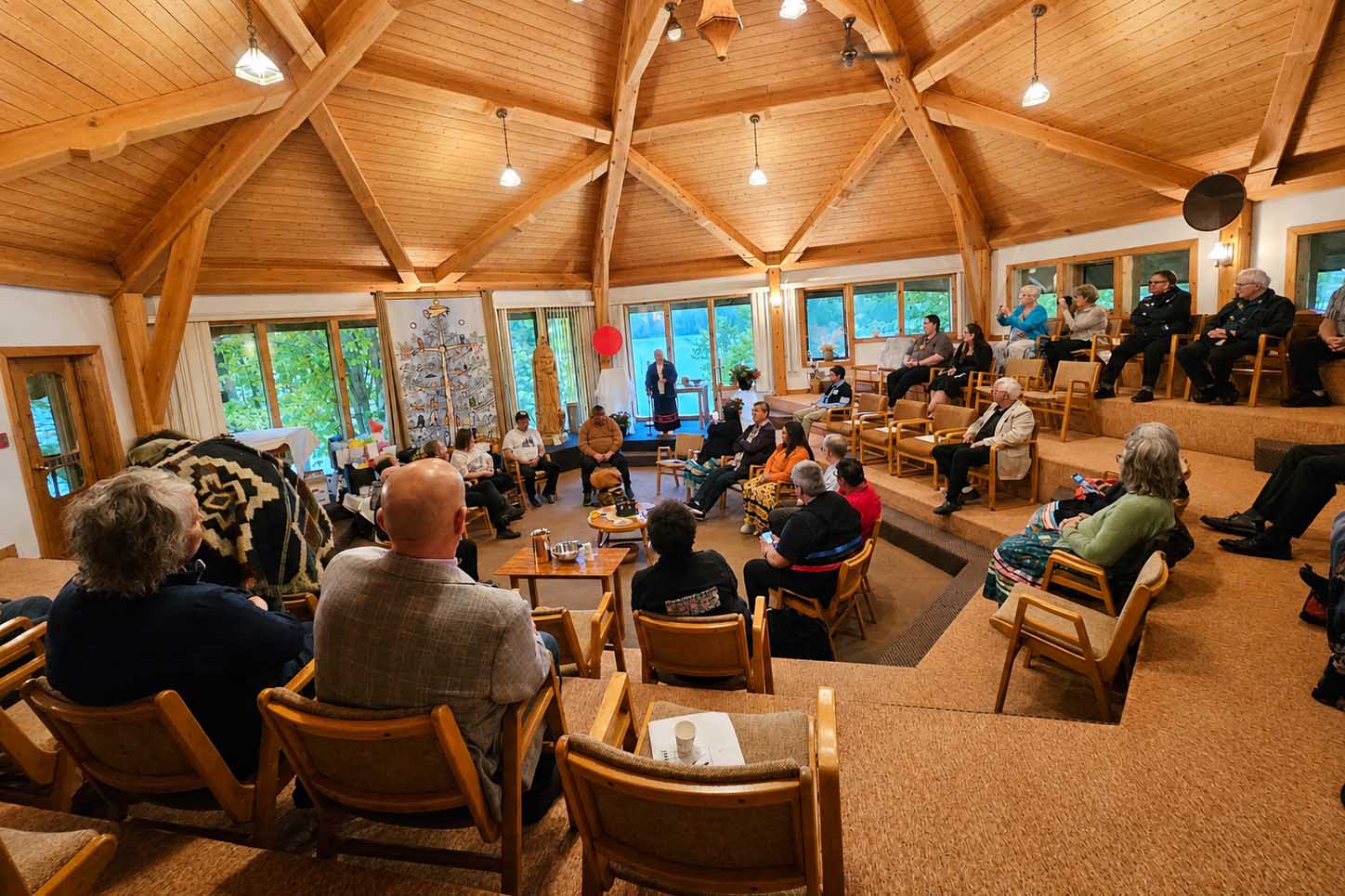
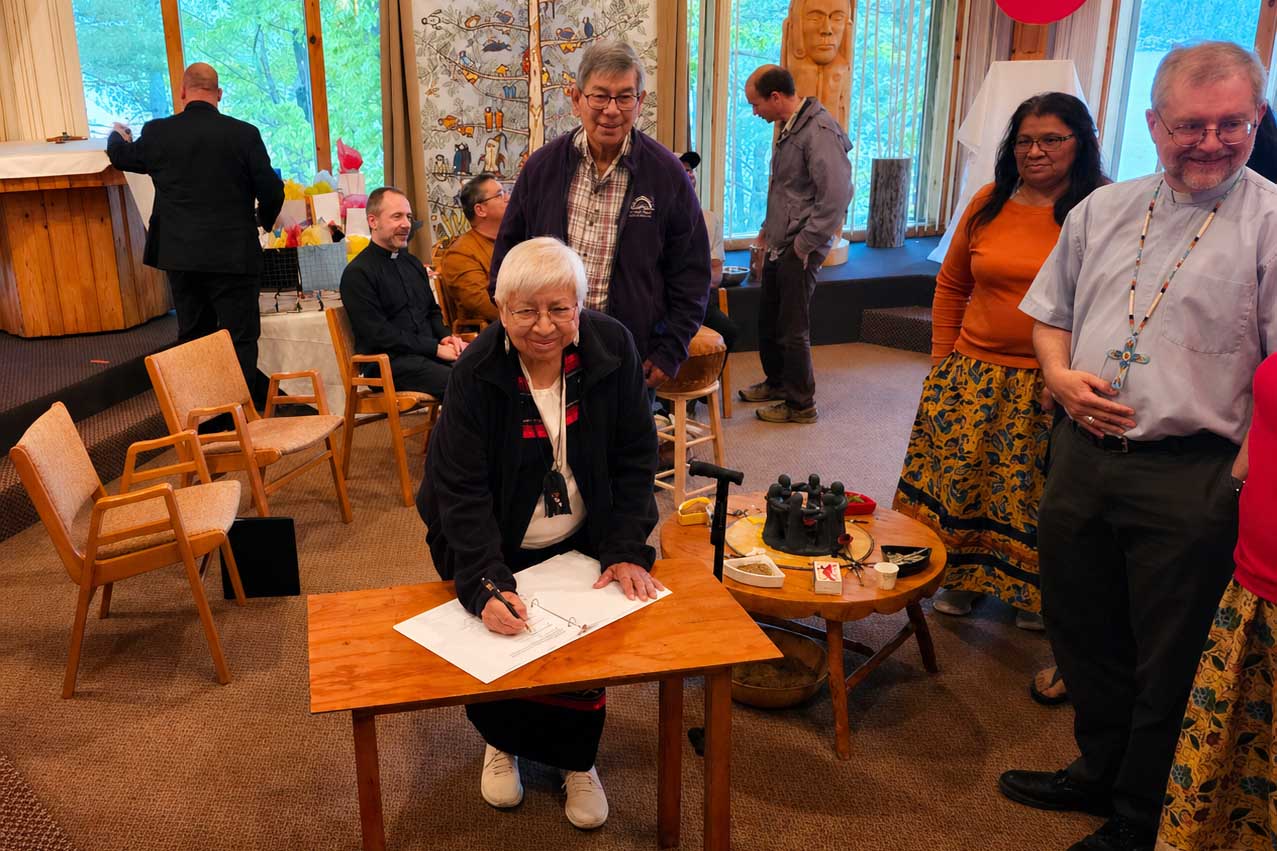
The Anishinabe Spiritual Centre is guided by an Indigenous-led Board of Directors, reflecting a longstanding commitment to Indigenous leadership in faith, formation, and community life.
This governance model represents an important evolution in the life of the Centre. It affirms the original vision “to support Indigenous peoples in leading their own spiritual path” while ensuring that decision-making, stewardship, and future direction are grounded in Anishinabe teachings, cultural knowledge, and lived experience.
Supported by the Diocese of Sault Ste. Marie, the Centre continues to operate as a place where Indigenous spirituality and the Catholic faith are held in relationship, creating space for reflection and reconciliation.
Today, this structure provides a strong foundation for the Centre’s continued growth as a place of gathering and shared understanding for all who visit.
A Living History
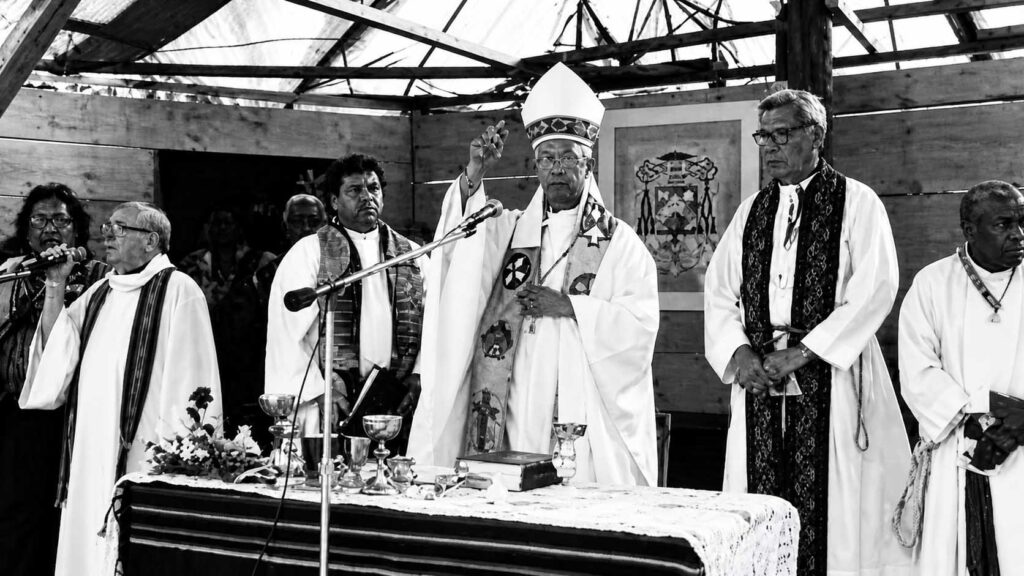
The origins of the Anishinabe Spiritual Centre trace back to the early 1970s, inspired by the spirit of Second Vatican Council and a growing commitment within the Church to Indigenous leadership. Jesuit priests, together with Bishop Alexander Carter, began an itinerant program to train First Nations deacons, travelling from community to community to deliver weekend sessions in scripture, theology, and pastoral practice.
By the late 1970s, the need for a permanent place became clear. In response, the Centre was established on the shores of Anderson Lake, creating a dedicated space for formation, gathering, and spiritual growth. Over time, its original focus expanded into a broader Ministries Program, welcoming both men and women and supporting a wider expression of parish-based leadership.
Today, the Centre stands not only as a place of formation, but as a living expression of reconciliation, where Indigenous and Catholic traditions continue to shape a shared path forward.
Building the Centre
The Centre itself was built through a remarkable combination of vision, craftsmanship, and community effort. A former resort property on Anderson Lake was transformed into a place of gathering, with construction led by Jesuit founder Fr. Mike Murray in partnership with master log and timber-frame builder Paul MacNab.
Materials were sourced locally, including white pine harvested nearby, and much of the work was completed using an on-site sawmill. Skilled tradespeople and community members contributed stonework, carpentry, and labour, often through volunteer “building bees” that brought families and communities together.
The main lodge, including the chapel wing, was completed in the mid-1980s, alongside a series of cottages. Some restored, others newly built. The result is a collection of buildings that reflect both the natural landscape and the collective effort that brought them to life.